Garage Floor Coating in Seattle: When It Comes to Protecting Concrete Slabs
Garage Floor Coating in Seattle: When It Comes to Protecting Concrete Slabs
Garage floors endure constant physical abuse from heavy vehicles, dropped tools, road salt, and fluid leaks. Unprotected concrete absorbs automotive fluids, leading to dark stains and surface pitting. Applying a professional garage floor coating in Seattle creates a sealed, decorative surface that stands up to daily wear.
Why Does Unsealed Garage Concrete Crack and Stain easily?
Garage concrete is inherently porous by nature. When cars park inside after driving through rain, water drips off tires and sinks deep into the open pores of the concrete slab. Engine oil, brake fluid, battery acid, and chemical antifreeze soak straight into the underlying concrete matrix, leaving permanent dark stains that cannot be washed away with simple household cleaners.
Daily vehicle traffic causes continuous structural damage. Vehicle weight compresses loose dust and loose aggregate on the top layer, causing the surface to crumble and create fine silica dust over time. Without a heavy-duty protective top coat, micro-cracks spread rapidly across the entire garage slab.
In addition to physical vehicle wear, concrete moisture vapor continuously moves upward from the ground through capillary action. Unprotected slabs absorb this moisture, which traps mineral salts inside the concrete pores. Over time, this causes spalling, surface scaling, and unsightly cracking across residential garages.
How Do Polyurea and Epoxy Systems Stop Hot Tire Pickup?
Hot tire pickup is one of the primary reasons standard garage floor paints fail. When vehicle tires drive on warm highways, they absorb significant frictional heat. When you park inside the garage, those heated tires transfer thermal energy directly into cheap water-based floor paint.
This heat softens the paint film, causing the tire tread to stick directly to the coating. As the tires cool down and contract overnight, they grip the unbonded paint and pull it right off the concrete slab when the car backs out the next morning.
Industrial polyurea and epoxy coatings solve this problem through deep mechanical bonding and high heat resistance. Installers use heavy diamond grinders to strip away weak concrete layers and open up the pores before applying a heavy-duty base coat. The liquid chemical coating fuses deep into the concrete slab matrix, creating a permanent bond and a heat-resistant floor that never peels under hot vehicle tires.
What Steps Are Involved in Repairing Cracked Garage Floors?
You cannot apply a high-quality floor coating directly over damaged or un-prepped concrete. Proper surface preparation fixes underlying structural defects before applying chemical floor layers:
- Surface Sweeping and Cleaning: Installers sweep, vacuum, and degrease loose gravel, dirt, surface oils, and dust from the garage slab.
- Mechanical Diamond Grinding: Industrial grinding machines strip off old sealers, low-grade paints, and weak surface concrete to open up the pores.
- Deep Crack and Chip Repair: Technicians clean out surface fractures and fill concrete cracks, pits, and spalled joint lines with high-strength polymer patching compounds.
- Surface Profile Flattening: Repaired areas are ground flat so the patch sits perfectly flush with the surrounding concrete slab.
- Pigmented Base Coat Bonding: A high-adhesion base coat goes down directly over the prepared concrete, soaking deep into the opened pores.
How Does the Floortex Flake System Enhance Garage Safety?
Bare concrete floors become extremely slick when wet, creating serious slip-and-fall hazards in residential garages. Rainwater tracked in by vehicle tires or puddles from melting snow turn smooth concrete into a dangerous walking surface. The Floortex flake system adds build texture across the floor, creating built-in slip resistance.
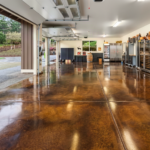
During installation, technicians broadcast decorative vinyl Floortex flakes into the wet base coat until the floor is completely saturated with color. Once dry, the excess flakes are scraped smooth, and a clear top coat seals the entire assembly.
This multilayer design creates a textured surface that improves foot traction while offering extreme resistance against oil saturation, heavy impacts, and dropped tools. Beyond safety, the decorative vinyl chips hide everyday dirt and surface imperfections, turning a plain concrete room into a clean, attractive home workspace.
Upgrading Your Home Workspace with Q-Line Garage Solutions
A clean, protected garage floor adds functional living space and substantial long-term value to your property. Q-Line helps homeowners transform worn, stained garage slabs into durable, showcase-quality workspaces using industrial-grade Penntek coating products.
Q-Line Team Leaders receive hands-on training with commercial diamond grinding equipment, polymer patch preparation, and multi-layer chemical application techniques. This comprehensive training ensures your garage floor coating easily stands up to 15 years of continuous vehicle traffic, chemical exposure, and heavy residential use.
Frequently Asked Questions
- What is hot tire pickup on a garage floor?
Hot tire pickup occurs when warm vehicle tires transfer heat to low-grade floor paint, softening the coating film. As tires cool, they grip the soft paint and pull it off the concrete slab upon vehicle departure.
- How soon can I park my car on a newly coated garage floor?
With fast-curing polyaspartic topcoats, you can walk on the floor within 4 to 6 hours and park vehicles inside within 24 hours of application.
- How do installers fix existing cracks in my garage floor?
Installers clean out loose debris and fill fractures with high-strength patching compounds during the surface preparation stage before applying the base coat.
- Can oil-stained garage concrete be coated successfully?
Yes. Mechanical diamond grinding removes oil-soaked surface layers, allowing the liquid base coat to form a clean chemical bond with fresh concrete beneath.
- Are vinyl flake garage floors easy to sweep and keep clean?
Yes. The clear top coat seals the vinyl flakes into a non-porous layer that keeps dirt, oil, and moisture on the surface for simple sweeping and mopping.