Epoxy Floor Coating in Seattle: Complete Installation Guide
Epoxy Floor Coating in Seattle: Complete Installation Guide
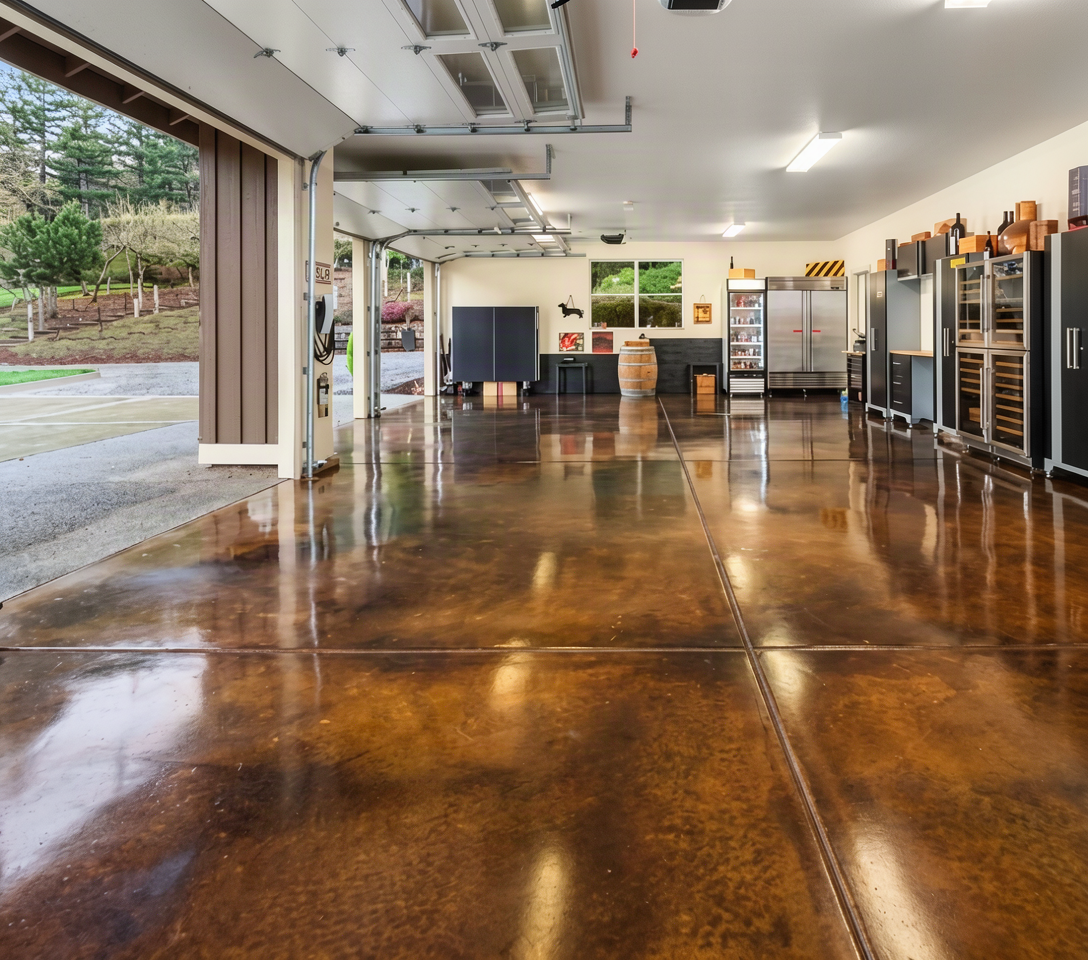
Commercial and residential concrete slabs face continuous exposure to heavy foot traffic, vehicle fluids, and high humidity. Without protective surface coatings, bare concrete absorbs liquids, stains easily, and breaks down over time. Applying a multi-layer epoxy floor coating in Seattle creates a durable, non-porous barrier that seals out moisture and transforms weak concrete into a heavy-duty surface.
Why Does Bare Concrete Fail so Quickly in Commercial Spaces?
Bare concrete is naturally porous. When cars drive across unsealed slabs, tires wear down the surface matrix and turn concrete aggregate into fine silica dust. Liquids like engine oil, gasoline, and water soak straight into the slab, leaving permanent dark stains.
Indoor humidity and rainwater also travel up through concrete via capillary action. Thin surface paints cannot hold up against this upward vapor pressure. Over time, trapped moisture causes traditional floor paints to blister, chip, and peel away.
How Does a 5-Step Floor Coating Application Process Work?
Installing a commercial-grade floor coating requires specialized machinery and strict surface preparation. Skipping surface prep causes coatings to peel within a year. The professional installation follows five specific steps:
- Diamond Grinding: Operators use heavy floor grinders with diamond tools to clear off old paint and open the concrete pores.
- Crack and Chip Repair: Technicians fill surface cracks and pits with high-strength patching compounds to flatten the slab.
- Pigmented Base Coat: Workers apply a deep-penetrating base coat that forms an unbreakable bond with the concrete.
- Decorative Flakes: Custom vinyl Floortex flakes are broadcast across the wet base coat to saturation for added strength and texture.
- Clear Top Coat: After scraping away loose flakes, installers seal the floor with a clear Floortex top coat.
What Makes Penntek Coatings Better Than Water-Based Epoxy Paint?
Traditional water-based epoxy paints lie loosely on top of concrete. When vehicle tires get warm from driving, they grip the soft paint film. As tires cool down, they pull the paint off the slab upon backing out.
Penntek chip coating systems use three distinct layers engineered for strength and flexibility. They anchor directly into diamond-grinded concrete rather than sticking to the surface. Penntek coatings resist hot tire pickup, chemical spills, and direct physical impacts, lasting up to 15 years.
Where Can You Install Multilayer Epoxy and Polyurea Chip Systems?
Multilayer chip systems work well in any environment that demands clean, impact-resistant flooring. They handle heavy equipment, vehicle traffic, and high foot traffic without wearing down. Common application areas include:
- Residential garage floors and basement utility rooms.
- Commercial showrooms, offices, and retail spaces.
- Veterinary clinics, restrooms, and school hallways.
- Warehouses, storage facilities, and aircraft hangars.
Because indoor floor coatings are applied inside climate-controlled spaces, installation can happen year-round. Poor outdoor weather never delays interior coating projects.
Transforming Your Concrete Slabs with Q-Line Epoxy Solutions
Upgrading your property with high-performance floor coatings requires experienced installers and proven product systems. Q-Line connects business owners and homeowners with trained local Team Leaders equipped with commercial diamond grinders and Penntek coating materials. Without professional surface preparation, traditional water-based coatings fail and peel within a year or two, leaving concrete vulnerable to hot tire pickup, moisture damage, and unsightly staining. Q-Line solves this by utilizing a rigorous 5-step application process—incorporating mechanical diamond grinding, polymer crack repairs, deep-penetrating base coats, decorative Floortex flakes, and ultra-durable clear topcoats.
Whether you need to coat a small residential garage, a basement, or an industrial warehouse floor, Q-Line delivers long-lasting concrete solutions that protect your investment for years. These advanced polyurea and epoxy systems create a seamless, non-porous barrier engineered to withstand extreme impacts, heavy forklift traffic, road salts, and chemical spills for up to 15 years. Supported by year-round indoor installation capabilities, tailored training, and continuous technical assistance, Q-Line Team Leaders ensure your commercial or residential concrete slabs achieve maximum durability, safety, and visual appeal.
Frequently Asked Questions
- How long does it take to install a 5-step epoxy chip coating system?
Most professional chip system installations finish in a single day. Fast-curing topcoats allow foot traffic within 4 to 6 hours and full vehicle parking within 24 hours.
- Why is mechanical diamond grinding necessary before coating concrete?
Diamond grinding strips away weak surface layers and creates a rough profile. This lets the liquid base coat penetrate deep into the concrete matrix for a permanent bond.
- How long do Penntek flooring systems last compared to paint?
Standard water-based concrete paint breaks down within 1 to 2 years. Penntek multilayer chip systems are formulated to deliver top-grade strength and stability for up to 15 years.
- Can epoxy floor coatings be applied during rainy or cold weather?
Yes. Indoor epoxy and polyurea installations happen inside covered buildings, making them ideal projects during poor weather.
- How do you clean and maintain a vinyl flake floor coating?
Cleaning is simple because the clear top coat creates a smooth, non-porous surface. You only need to sweep up dust and mop with mild soap and water.